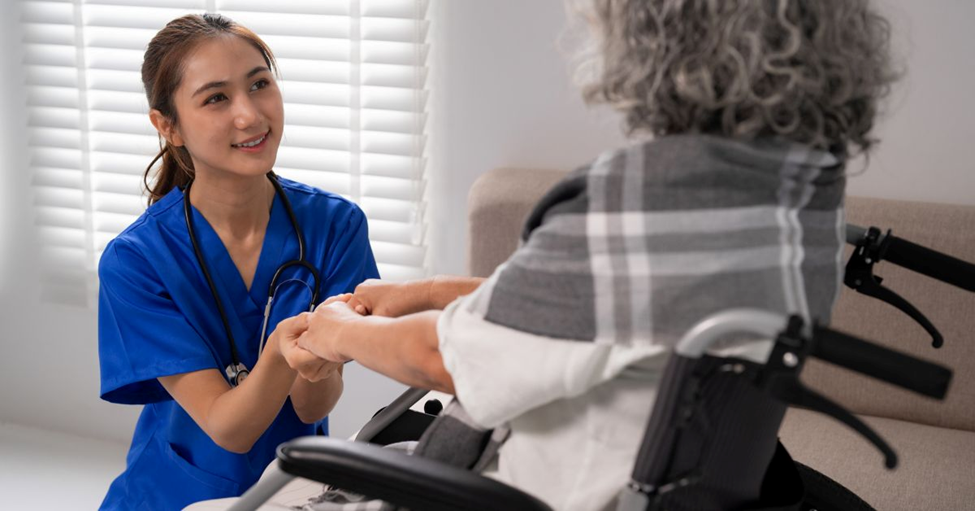
The homecare sector stands out as one of the most resilient and consistently growing areas of the UK economy. For buyers looking to acquire a business that offers long-term stability, homecare deserves serious consideration, and in 2026, the opportunity has never been more compelling.
A Sector Built to Last
Homecare is not simply a healthcare business. It sits at the intersection of two powerful forces: an ageing UK population with ever-growing care needs, and a public that increasingly prefers to receive care in the comfort of their own homes rather than being placed in residential settings.
The implications of this cultural and demographic shift are significant. Care homes carry considerable fixed overheads, including heating, building maintenance, and regulatory compliance tied to a physical site. As energy and operational costs have risen sharply in recent years, many operators have found those margins increasingly difficult to protect. By contrast, a homecare business carries none of those property burdens. Its infrastructure is its people and its processes, both of which are scalable.
Because a homecare business is not constrained by a fixed number of beds or rooms, it can grow continuously. There is no ceiling on capacity in the way there is with a residential facility. This is one of the most attractive structural features of the model.
An Opportunity for Care Home Operators Too
For those who already operate in the residential care sector, homecare represents a compelling bolt-on or pivot opportunity. The expertise developed running a care home, including care coordination, staff training, CQC compliance, and client relationship management, translates directly and powerfully into domiciliary care delivery. In many respects, those skills command an even greater premium in the homecare environment, where the quality of individual care delivery is front and centre.
Public and Private Clients: Two Distinct Markets
A homecare business typically serves two types of clients – understanding both is essential for any prospective buyer.
For private clients, reputation is everything. Word of mouth, online reviews, and community standing drive referrals. A business with a strong local reputation can charge a premium and attract a loyal, growing client base without relying solely on public funding.
For publicly funded clients, the route to growth runs through local authorities and councils. To be placed on commissioned care frameworks, a provider must demonstrate consistent and highly stringent compliance, high standards of care, and a track record of reliability. This is not a market that rewards shortcuts. Regulatory adherence is not optional; it is the foundation upon which the entire business model rests.
The Role of Compliance Ratings
One of the first things any buyer should examine when considering a homecare acquisition is the relevant regulator’s quality rating. In England, this is the Care Quality Commission (CQC). A ‘Good’ or ‘Outstanding’ rating is a powerful commercial asset. It signals to local authorities, private clients, and potential acquirers alike that the business is well run, properly staffed, and compliant with national standards.
In Scotland, the equivalent regulator is the Care Inspectorate Scotland, while in Wales it is Care Inspectorate Wales (CIW). In Northern Ireland, oversight is provided by the Regulation and Quality Improvement Authority (RQIA). Although the terminology and grading systems differ slightly across each nation, the underlying principle remains consistent: a strong compliance rating is a clear indicator of operational quality, governance, and market credibility.
It is also worth noting that not every business on the market will have a published rating in place. In England, some providers are registered with the Care Quality Commission but are still awaiting their first inspection. Similar situations can occur across the devolved nations, particularly where services have recently expanded or changed registration scope.
In some cases, a business may have grown rapidly following registration, with the owner choosing to sell before the inspection cycle has fully concluded. These situations require careful due diligence, but they do not necessarily represent a red flag if the underlying operation, staffing, and governance framework are sound.
Staff, Training and the Complexity of Operations
Running a homecare business is operationally demanding. Staff are constantly moving between client locations, schedules are dynamic, and the human element of care delivery means that no two days are the same. Rigorous staff training is not just a regulatory requirement; it is the backbone of service quality and, by extension, reputation.
Prospective buyers should go in with a clear understanding of the operational complexity involved. Some business owners find themselves stretched by the sheer number of moving parts. For the right buyer, however, this complexity is also a barrier to entry that protects an established, well-run business from easy competition.
Different Types of Homecare, Different Valuations
Not all homecare businesses are the same. Some focus on elderly care and companionship services. Others specialise in more complex clinical needs, including support for those living with brain injuries, neurological conditions, or serious long-term illness.
The nature of the care delivered has a direct bearing on the value of the business. Complex care commands higher fee rates and often carries stronger margins, though it also requires a more highly trained and closely managed workforce. Buyers should be clear on the type of homecare they are acquiring and ensure their experience and ambitions align with the client base.
Why 2026 is Still a Good Time to Buy a Homecare Business
The past several years have tested businesses across every sector. Multiple recessions, inflationary pressures, and shifting government policy have created a difficult environment. But that environment has also acted as a filter. The homecare businesses that are still trading well today have demonstrated genuine resilience. They have adapted, maintained their compliance, held onto their staff, and continued to serve their clients through considerable adversity. That track record has real value and a not-too-bad CAGR to boot.
The CAGR (compound annual growth rate) of the UK’s homecare market is expected to be growing at a rate of 11.6% from 2026 to 2030, according to Grand View Research.
Buying a homecare business in 2026 means acquiring something that has been tested. For a committed buyer who is prepared to invest in maintaining or improving the business’s reputation, the outlook is positive.
Why Redwoods Dowling Kerr?
When it comes to buying a homecare business, the knowledge and reach of your broker matters enormously. Redwoods Dowling Kerr (RDK) is the UK’s leading specialist broker in the healthcare and homecare sector, with a portfolio of close to 300 opportunities across the UK and a track record of completing in excess of 1,000 transactions over the last five years. RDK’s sales contribute strongly to Altius Group’s ranking in the top 10 in the UK for transaction volume and the brand holds a 4.7 out of 5 rating on Trustpilot, with 95% of reviews rated five stars.
Whether you are a first-time buyer, an existing care operator looking for a bolt-on acquisition, or an investor seeking a sizeable standalone operation, RDK has both the listings and the sector expertise to help you find the right business. With dedicated healthcare brokers who focus solely on this sector, you will be guided by people who understand the nuances of CQC compliance, local authority frameworks, and the true drivers of value in a homecare business.
If you are considering buying a homecare business, the starting point is a conversation with the team that knows this market better than anyone else in the UK. Contact Redwoods Dowling Kerr for a confidential conversation.
MORE FROM CATEGORY: Healthcare Transactions

